Everything worth asking.
Answers about soap, ingredients, process, practical use and the tradition behind true soapmaking.
What is true soap?
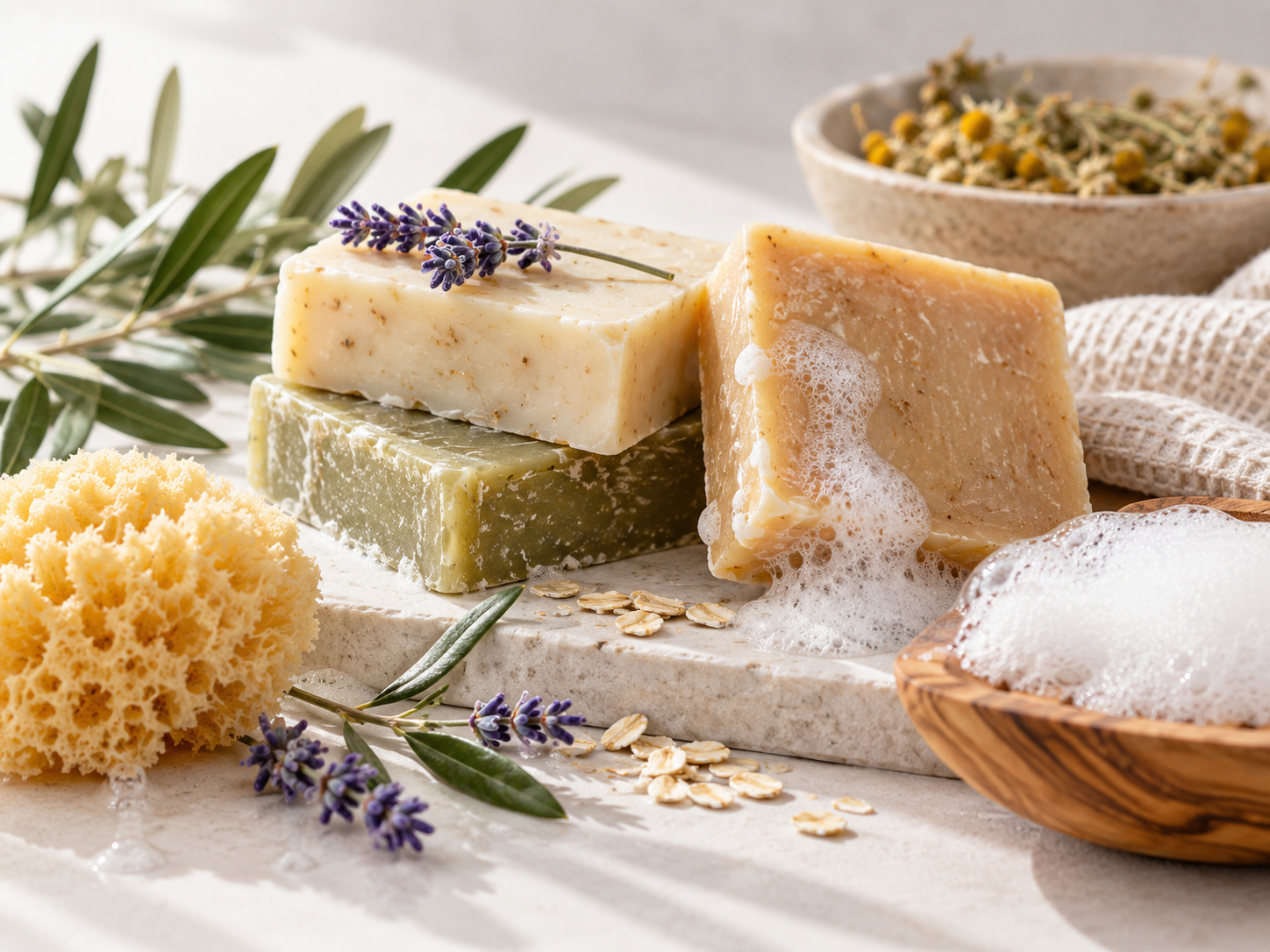
True soap is created when oils or fats react with an alkali during saponification. The finished cleanser is made primarily of the alkali salts of fatty acids, which is what distinguishes soap from many modern cleansing products.
In everyday shopping, the word soap is often used broadly. In technical terms, however, a traditional soap and a synthetic detergent cleanser are not the same type of product, even if both are used to clean skin or household surfaces.
What is saponification?
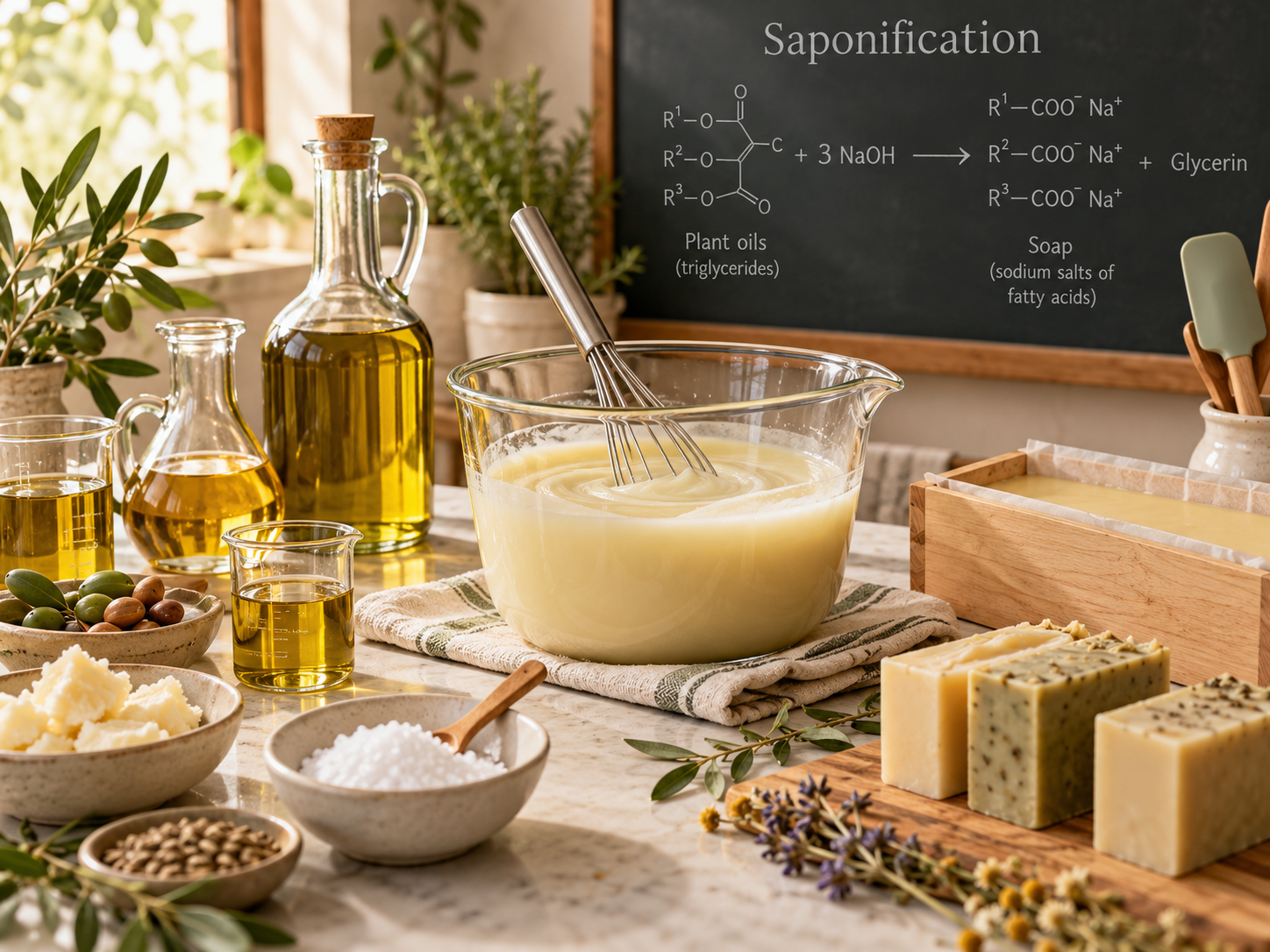
Saponification is the chemical reaction between oils and an alkali that transforms the starting ingredients into soap and glycerin. It is the core process that turns plant oils into a true cleansing material.
In traditional soapmaking, this reaction is not just a technical detail; it defines the identity of the final product. Understanding saponification helps explain why soap behaves differently from a simple blend of oils or from many synthetic cleansing products.
Why is potassium hydroxide used in liquid soap?
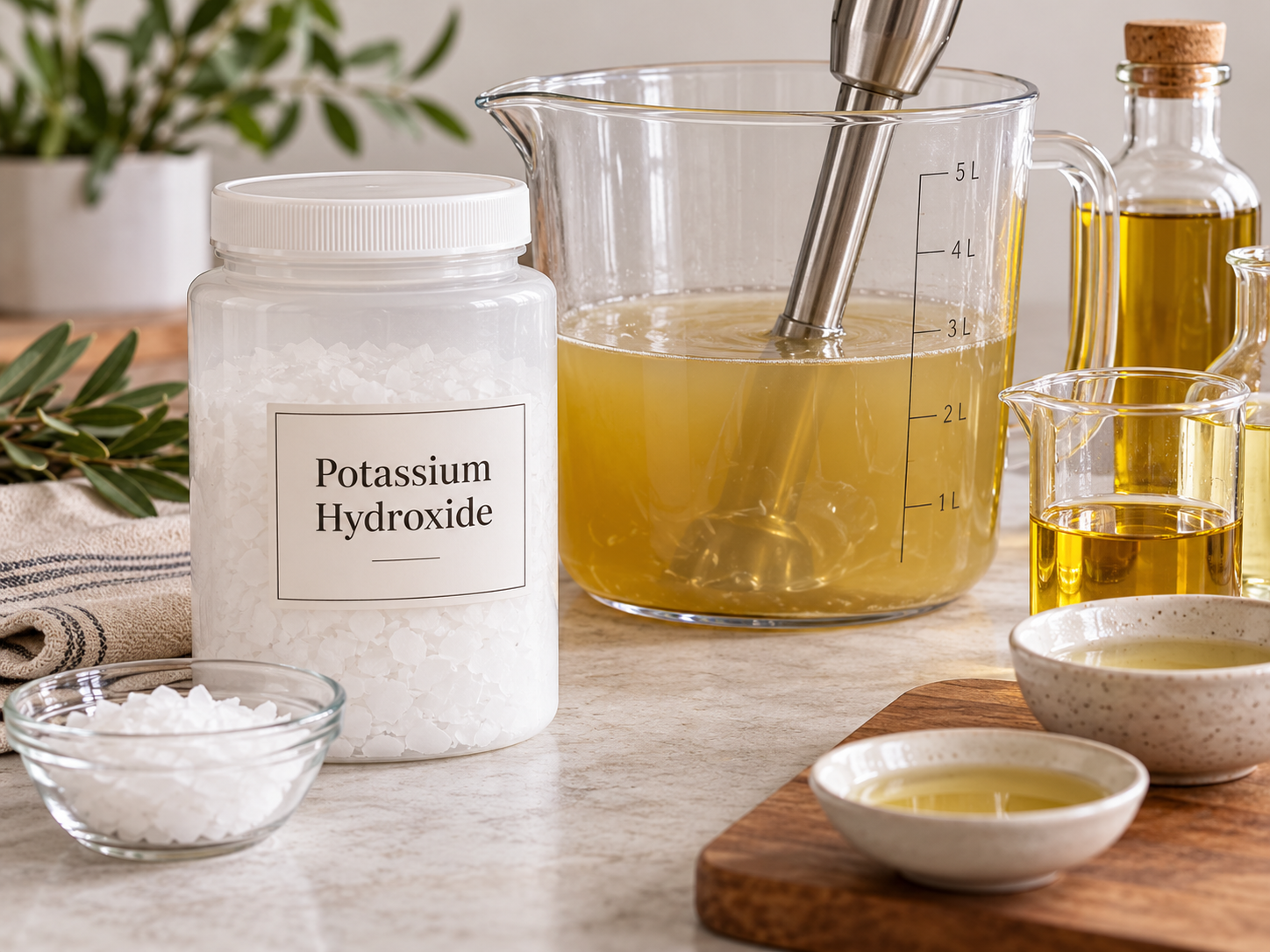
Potassium hydroxide (KOH) is commonly used in traditional liquid soapmaking because it helps create a soap that can be diluted into a fluid format. By contrast, sodium hydroxide is more commonly associated with bar soap.
When properly formulated and fully reacted, potassium hydroxide serves as part of the traditional liquid-soap process rather than remaining as free alkali in the finished product.
Which oils matter in a traditional soap formula?
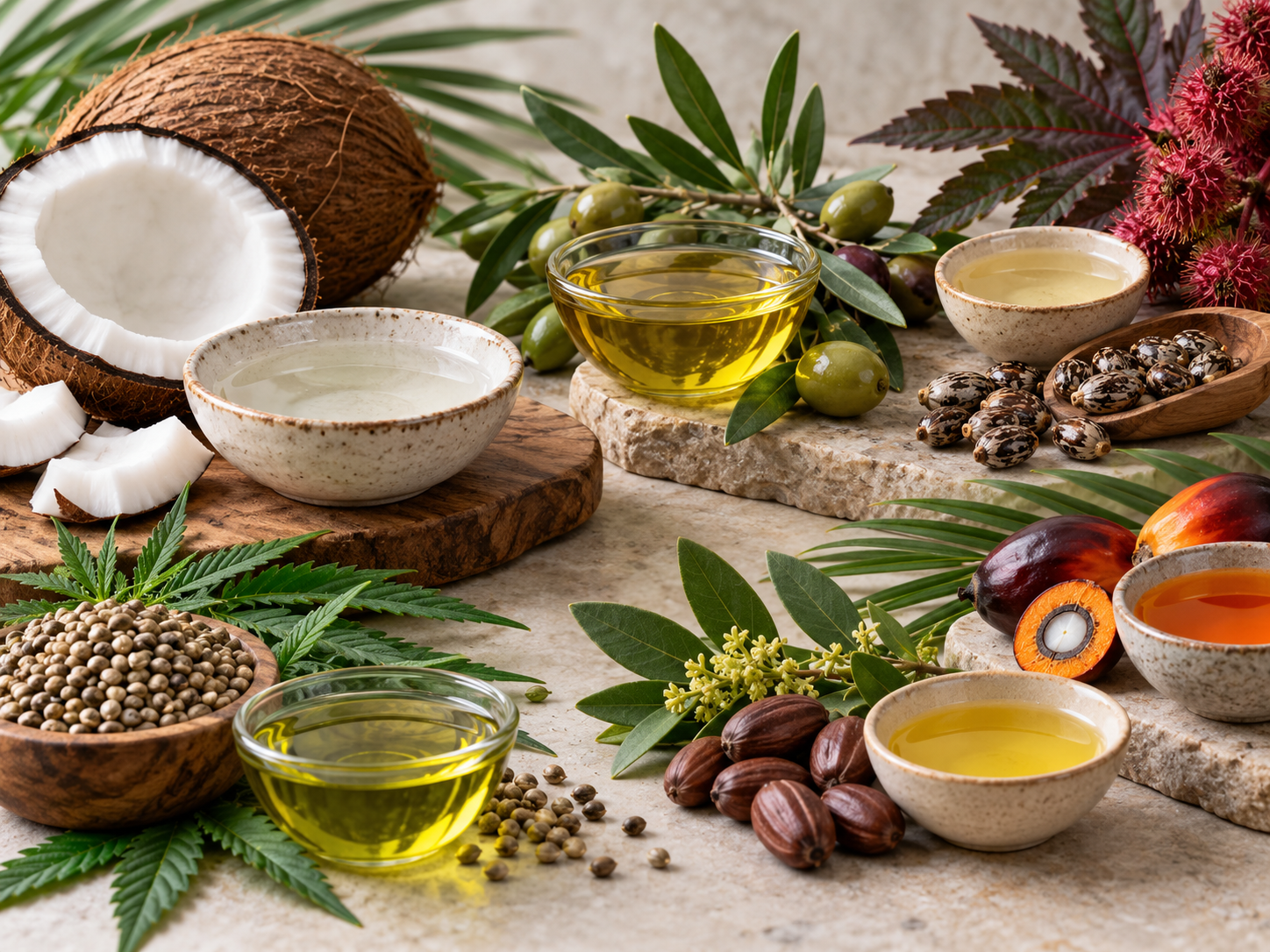
Different oils contribute different properties. Some are often selected for cleansing power and foaming, while others are chosen for the way they influence solubility, texture, lather character and the overall feel of the formula.
Looking at soap through the lens of raw materials is one of the best ways to understand why formulas differ. A soap made with multiple plant oils can be designed with a broader balance of properties than a formula based on only one source material.
Is soap the same as body wash?
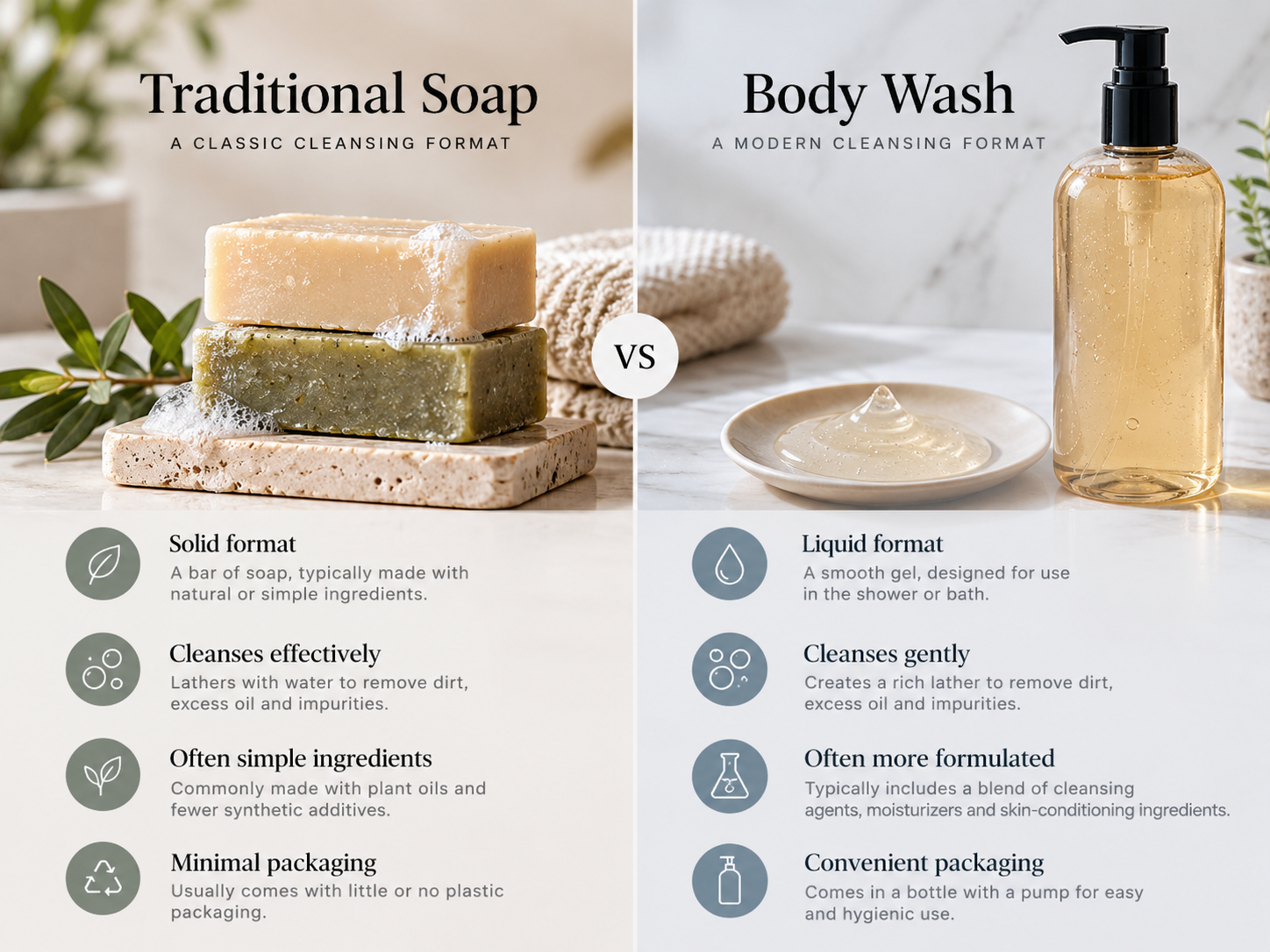
Not always. Many body washes rely on synthetic surfactants rather than traditional soap. Both categories can cleanse, but they are made differently and often behave differently in water, lather structure and formula design.
That difference is one reason why ingredient education matters. A label may look simple from the outside, but the underlying chemistry and product category can be very different.
Can traditional liquid soap be used for more than one purpose?

Yes. One of the practical appeals of traditional liquid soap is that it can be adapted to different household uses depending on the formula and the dilution. Common examples include handwashing, dishwashing, household cleaning and stain pretreatment.
Even so, each use should still be approached thoughtfully. A product may be versatile without being identical in performance across every possible application.
Why can liquid soap become cloudy, and how should it be stored?

Traditional liquid soap can sometimes look cloudy in colder conditions. Temperature can affect clarity, so a soap that appears clear at room temperature may temporarily turn hazy when it gets cold.
Good storage matters too. Keeping the product sealed, under normal household conditions and used within the recommended period helps preserve quality and day-to-day performance.
What is the history behind soapmaking?

Soaplike materials appear in ancient records, and the craft developed across multiple cultures over centuries. What began as a practical household and trade skill later became a more refined craft with deeper understanding of materials and process.
That long history is part of what makes true soap interesting. It is not only a product, but also a tradition built on oils, alkali, technique and practical everyday use.